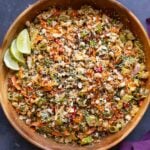
Crunchy Peanut Gochujang Salad
Seriously satisfying high protein salad with edamame, crispy tempeh, cabbage, carrots, kale, in a creamy peanut gochujang dressing. 23 gms of protein, meal prep friendly. (gluten-free, soy-free, and nut-free options)
Servings: 5
Ingredients
For the Salad
- 1 1/2 cups chopped cabbage or more, to taste
- 1/2 cup chopped carrots or julienned or cut into ribbons with a vegetable peeler
- 1/2 cup chopped cucumber or more, to taste
- 1 cup chopped red bell pepper
- 1/2 cup sliced snap peas or other vegetables such as broccoli, asparagus, or additional bell pepper
- 1 cup packed chopped baby kale or more, to taste
For the Edamame
- 1 cup edamame or more, to taste
- 1 teaspoon toasted sesame oil or regular oil
- 1 tablespoon soy sauce
- 1/2 teaspoon garlic powder
For the Crispy Gochujang Tempeh
- 8 ounces tempeh crumbled or chopped small
- 2 teaspoons oil
- 1 clove garlic minced
- 1 tablespoon soy sauce
- 2 teaspoons gochujang
- 1 teaspoon lime zest
For the Dressing
- 1/2 cup creamy peanut butter at room temperature
- 1 to 1 1/2 tablespoons maple syrup
- 1 1/2 tablespoons soy sauce
- 1 tablespoon rice vinegar
- 2 tablespoons lime juice or more, to taste
- 2 teaspoons minced garlic
- 1 to 2 tablespoons gochujang
- 1 teaspoon toasted sesame oil
- salt to taste
- hot water as needed
For Garnish
- 2 to 3 tablespoons sesame seeds
- 2 to 3 tablespoons chopped roasted peanuts
- green onion sliced
Instructions
Prepare the veggies.
- Chop all of the vegetables and set them aside. Chop everything pretty small and to a similar size, so that no single vegetable stands out too much. I like to cut the carrots into julienne strips or ribbons using a vegetable peeler, then chop the ribbons a little bit. For the cucumber, slice it and then cut each slice into 4 to 6 pieces, depending on the size of the cucumber.
Make the edamame and crispy tempeh.
- Heat a large skillet over medium heat. Add the oil. Once the oil is hot, add the edamame and spread it out in the pan. Let it cook undisturbed for 2 to 3 minutes, then stir. Continue cooking, stirring every minute or so, until the edamame begins to brown on some of the edges, about 6 to 7 minutes. Add the soy sauce and garlic powder, mix well, and cook until the soy sauce dries out and coats the edamame. Remove to a bowl and set aside.
- If you haven't already, crumble the tempeh by hand or finely chop it with a knife. You can also pulse it in a food processor for a finer crumble.
- Using the same skillet, make the tempeh. Heat the oil over medium-high heat. Add the tempeh to the skillet, toss with the oil, spread it into an even layer, and let it cook undisturbed for about 3 minutes. Stir, spread it out again, and let it sit for another couple of minutes. Continue cooking, stirring occasionally, until it is nicely golden, about 7 to 10 minutes total, depending on your skillet, stove, and the size of the tempeh pieces.
- When the tempeh is almost all golden, about 7 to 8 minutes into cooking, add the garlic and cook for another minute. Move the tempeh to the sides of the skillet, and reduce the heat to medium. Add 2 tablespoons of water to the center, then add the soy sauce and gochujang. Stir those together, then mix everything into the tempeh. Cook for another minute or so until the sauce coats the tempeh and begins to dry slightly. Switch off the heat, add the fresh lime zest, toss well, and set aside.
Meanwhile, make the dressing.
- Let the peanut butter come to room temperature before you begin, so it's easier to mix. Add the peanut butter to a bowl along with the maple syrup, soy sauce, rice vinegar, lime juice, garlic, gochujang, and toasted sesame oil. Mix well, then thin it out with 2 tablespoons of hot water and stir. Continue adding hot water, 1 to 2 tablespoons at a time, until the dressing reaches your desired consistency. Taste and adjust the seasoning, adding salt if needed.
Assemble the gochujang salad.
- Add all of the vegetables to a large salad bowl. Add the edamame and half of the crispy tempeh. Drizzle the peanut gochujang dressing over everything and toss well. Taste and adjust the seasoning, adding more salt, pepper flakes or gochugaru pepper flakes for heat, or additional lime juice for more tang, if needed. Top the salad with the remaining crispy tempeh, sesame seeds, roasted peanuts, and sliced green onion, and this is going to be a mind-blowing salad.
- Serve as is, with tortilla chips, wonton crisps, or toasted bread on the side. You can also use it as a filling for making fusion tacos or wraps. Serve with noodles or over roasted sweet potato with extra dressing! Storage: This hearty, crunchy salad keeps well in the refrigerator for up to 3 days. If you're making it ahead, store the chopped vegetables and edamame together, the crispy tempeh separately, and the dressing separately. When you're ready to serve, combine everything, garnish, and enjoy.
Video
Notes
This recipe is gluten-free, as long as your gochujang is gluten-free (see below for a homemade version). To make it nut-free, use sunflower seed butter instead of peanut butter and sunflower seeds instead of peanuts.
Since the recipe uses gochujang, tempeh, and edamame, it is soy-based. For a soy-free version, use soy-free tempeh, if available, or substitute chickpea flour tofu, seitan, or a soy-free meat substitute. Use cooked chickpeas, green chickpeas, or other cooked beans in place of the edamame. Replace the soy sauce with coconut aminos. Make soy-free gluten-free gochujang by mixing together 2 teaspoons each of: gochugaru pepper flakes, chickpea miso, coconut aminos and 1 teaspoon maple syrup.
Nutrition
Calories: 429kcal | Carbohydrates: 28g | Protein: 23g | Fat: 29g | Saturated Fat: 5g | Polyunsaturated Fat: 9g | Monounsaturated Fat: 12g | Sodium: 565mg | Potassium: 819mg | Fiber: 7g | Sugar: 11g | Vitamin A: 3642IU | Vitamin C: 62mg | Calcium: 182mg | Iron: 4mg